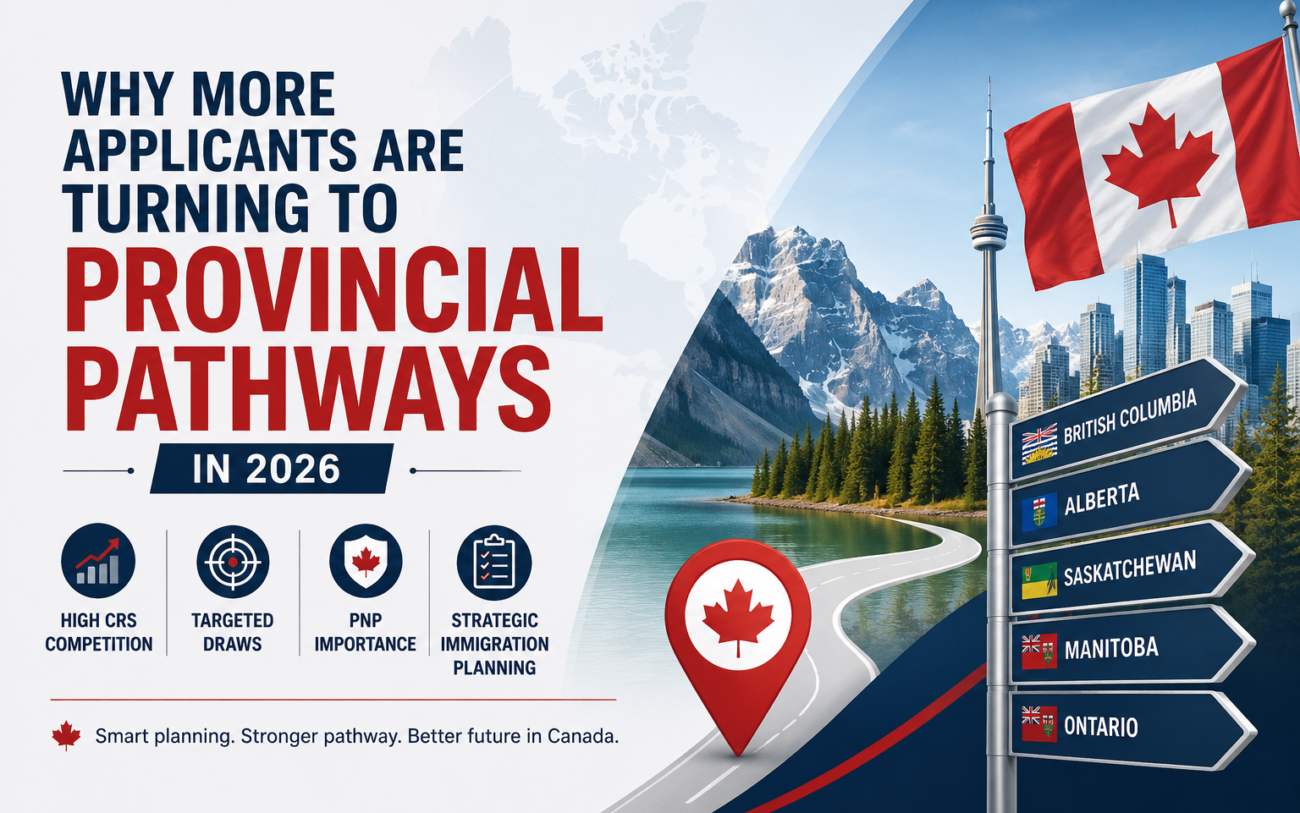
Why More Applicants Are Turning To Provincial Pathways In 2026?
For years, many immigrants viewed Express Entry as the main pathway to permanent residence in Canada. The process seemed straightforward — build a strong profile, gain Canadian education or work experience, improve your CRS score, and wait for an invitation.
But 2026 is showing a very different immigration reality.
With CRS scores reaching increasingly high levels and immigration draws becoming more targeted, many applicants are now realizing that relying only on traditional federal pathways may no longer be enough.
As a result, more people are now turning toward Provincial Nominee Programs (PNPs) as a strategic pathway to permanent residence in Canada.
The Immigration Landscape Has Changed
Canada is still welcoming immigrants, but the system is becoming more selective and focused on specific labour market needs.
Recent immigration trends show stronger preference toward:
- Healthcare professionals
- Skilled trades workers
- French-speaking candidates
- Employer-supported applicants
- Occupations facing labour shortages
At the same time, many general Express Entry draws are becoming more competitive, with CRS cut-offs remaining high for many applicants.
This shift has forced people to rethink how they approach immigration planning in Canada.
Why Provincial Pathways Are Becoming More Important?
Provincial Nominee Programs allow provinces to select candidates who meet their local economic and workforce needs.
In simple terms:
Canada is no longer only asking, “Who has the highest CRS score?”
It is increasingly asking:
“Who fits the labour needs of a specific province?”
This is exactly why provincial pathways are becoming more valuable in 2026.
A provincial nomination can significantly strengthen an applicant’s immigration profile and may open opportunities that would otherwise feel out of reach through federal draws alone.
Strategic Planning Matters More Than Ever
One of the biggest mistakes applicants continue to make is relying on outdated immigration trends from previous years.
A pathway that worked easily in 2021 or 2022 may no longer provide the same opportunities today.
Many applicants are now realizing that immigration success in 2026 is less about luck — and more about strategy.
This includes:
- Choosing the right province
- Selecting programs linked to labour demand
- Understanding targeted occupations
- Improving language scores
- Planning beyond just “getting to Canada”
- Building a long-term immigration strategy early
The applicants succeeding today are often the ones who planned their pathway carefully from the beginning.
Provincial Pathways Are Not “Easy PR”
It is important to understand that PNP pathways are not shortcuts.
Every province has different eligibility requirements, priorities, and nomination streams. Some pathways may focus heavily on specific occupations, employers, language abilities, or regional needs.
What works for one person may not work for another.
That is why understanding your profile properly before making decisions is becoming more important than ever.
The Future Of Canadian Immigration Is Becoming More Targeted
Canada’s immigration system is evolving.
The era of broad, predictable immigration pathways is slowly changing into a system that rewards:
- targeted skills
- labour market relevance
- strategic planning
- adaptability
And this is exactly why provincial immigration pathways are becoming a major focus for applicants across Canada in 2026.
Final Thoughts
Canada still offers incredible opportunities for immigrants.
But the immigration system today requires more planning, awareness, and strategy than it did a few years ago.
For many applicants, provincial pathways are no longer just an alternative option — they are becoming one of the most important parts of long-term PR planning.
At AeroPath Immigration, we help applicants understand their options and build immigration strategies based on current realities, not outdated assumptions.
Because in today’s immigration system, planning smart matters more than ever.