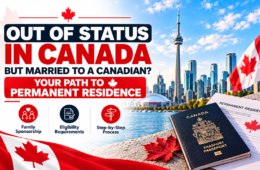
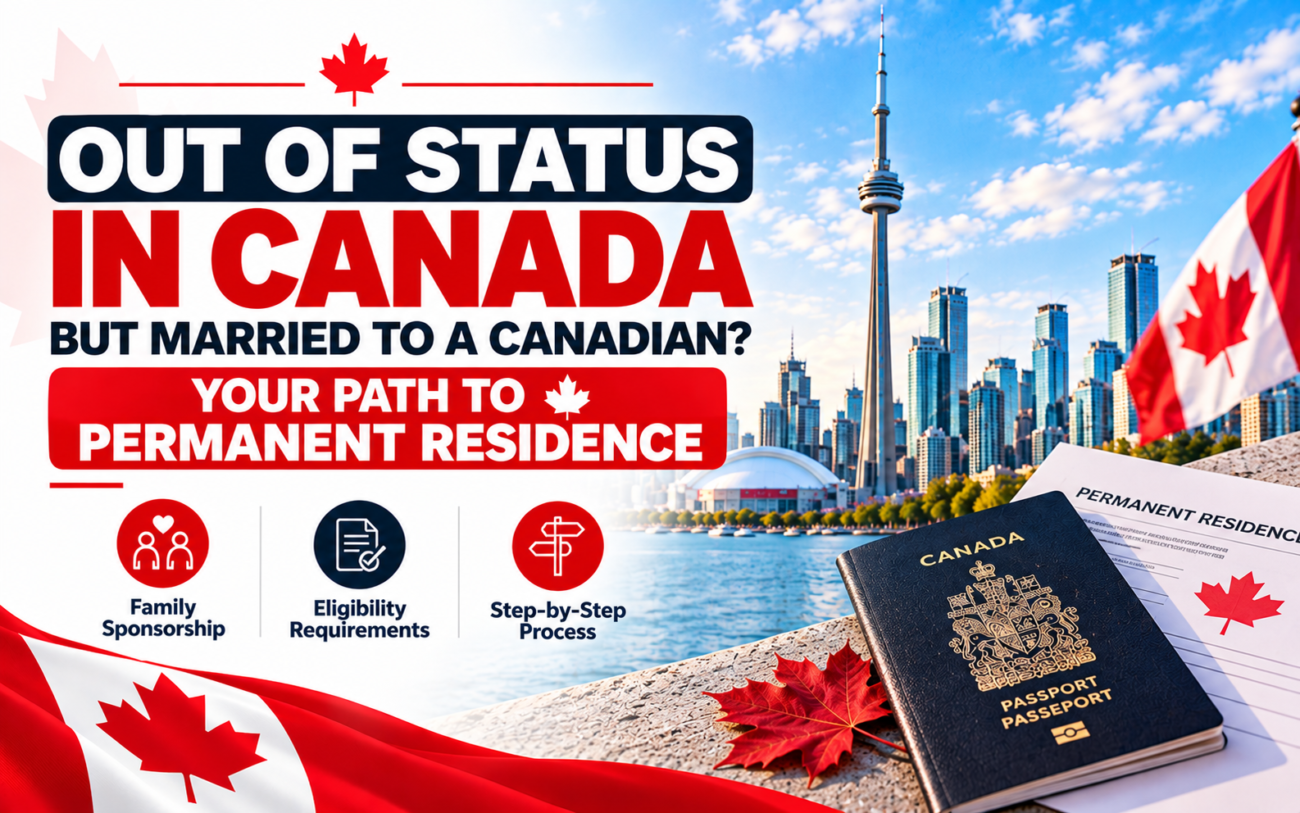
Out of Status in Canada but Married to a Canadian? Your Path to Permanent Residence
Falling out of status is not the end of your story
Losing temporary status happens more often than people admit. A work permit lapses while a renewal is still pending, a student misses a deadline, or a visitor simply stays on. When your partner is a Canadian citizen or permanent resident, the first fear is usually separation: will you have to leave and wait abroad?
Not necessarily. Canada has a public policy that lets many out-of-status spouses and common-law partners apply for permanent residence without leaving the country. This guide from AeroPath Immigration explains how that route works, what officers look for, and how to avoid the mistakes that sink otherwise strong files.
How the inland route works when your status has lapsed
Normally, applying from inside Canada requires valid temporary status. For spouses and partners, IRCC sets that rule aside under a public policy based on section 25(1) of the Immigration and Refugee Protection Act. In plain terms, the officer agrees not to hold your lapsed status against you, as long as the rest of your file is sound.
Three conditions carry the most weight:
- Your partner can sponsor you. They must be eligible and must sign a three-year undertaking.
- Your relationship is genuine. You are married or in a common-law partnership, and you live together in Canada.
- You are otherwise admissible. Criminal, security and medical grounds are still assessed, and misrepresentation can end a file quickly.
The policy has limits. It does not cover entry on fraudulent documents or returning after deportation without permission, and you will need a valid passport before permanent residence is granted. Spousal sponsors face no minimum income threshold, although the other sponsor eligibility rules still apply.
Common myths, straight answers
| Myth | Reality |
| You must leave Canada before applying | Many out-of-status spouses can apply from inside Canada under the public policy |
| Applying guarantees you can stay | Approval still depends on a genuine relationship, sponsor eligibility and admissibility |
| You can get a work permit straight away | Out-of-status applicants generally must wait for a positive first-stage decision |
| A short trip abroad is harmless | Leaving can put re-entry and your pending file at risk, so get advice first |
| The policy covers every problem | Criminality, security concerns and misrepresentation are not waived |
A practical 30-day action plan
- Gather core documents (days 1–7). Passport, expired permits, marriage certificate or proof of common-law cohabitation, and identity records for both of you.
- Confirm your sponsor’s eligibility (days 3–10). Check proof of citizenship or PR, residency, past sponsorships, and any criminal or financial issues.
- Review your history honestly (days 5–14). List every entry, permit and gap in status. Officers compare your account with government records, so inconsistencies hurt.
- Build the relationship file (days 7–21). Collect the evidence described below and ask friends and family for signed declarations.
- Complete the forms and sign the undertaking (days 21–28). Answer every question fully, because unexplained blanks cause delays.
- Submit and track (day 30). Keep copies, watch your online account, and answer any IRCC request before its deadline.
Timing matters. Applying before enforcement proceedings begin generally gives you stronger protection than applying afterwards.
Evidence that persuades an officer
IRCC wants to see a relationship with history, not just paperwork. Strong files blend several kinds of proof:
- Shared home: lease or mortgage, utility bills, insurance and bank statements showing one address.
- Shared life: photos from different years and places, travel records, and messages that show an ongoing conversation.
- Shared circle: signed declarations from relatives and friends who know you as a couple, plus wedding or ceremony records.
- Shared finances: joint accounts, split expenses and beneficiary designations.
Quality beats volume. Twenty well-organized items spread across the full length of your relationship will carry more weight than a hundred near-identical screenshots.
Protecting your application while you wait
Two cautions deserve special attention. First, travel: leaving Canada while an inland application is pending carries real risk, since a border officer can refuse re-entry, and the risk is higher when status has lapsed. Do not book a trip without professional advice.
Second, work: if your status has expired, you generally cannot apply for a spousal open work permit until you receive a first-stage approval. Plan your household budget around that gap, and keep your address and contact details current so no IRCC letter is missed.
When applying from outside Canada may be the smarter move
The inland route is not always the best one. Applications filed from outside Canada are generally processed faster, and a refusal can be appealed, which is not the case for inland refusals. For a partner who can leave and return safely, that may be worth weighing. For someone out of status, though, departing can bring re-entry barriers and months of separation. Processing times shift often, so check IRCC’s official tool before you decide.
How AeroPath Immigration can help
No two out-of-status cases look alike. AeroPath Immigration reviews your timeline, flags risk areas, and helps you prepare a complete, consistent application so your relationship is presented clearly from the first page. Visit aeropathimmigration.com to book a consultation and get an honest view of your options.
Frequently asked questions
1. Can I apply if I entered Canada without a visa?
Sometimes, yes. How you entered matters, and entry on fraudulent documents is excluded from the policy.
2. Do I need a representative?
It is not legally required, but errors in status history or evidence are costly, so a professional review is wise.
3. Can my children be included?
Dependent children can generally be added to the application.
4. How long will it take?
Processing times change regularly, so check IRCC’s official processing-times page before planning.
This article is general information, not legal advice. Your situation may differ.