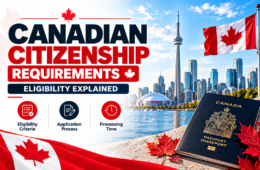
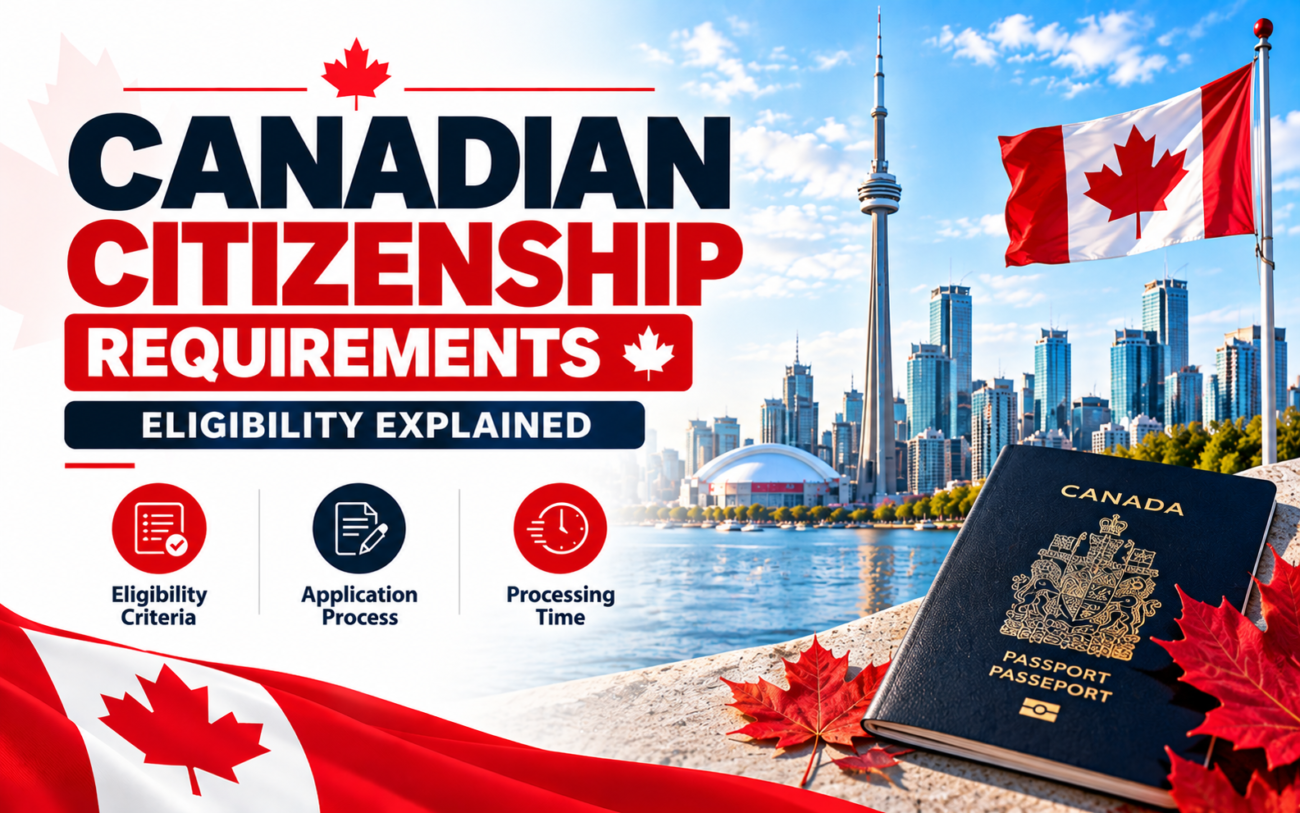
Canadian Citizenship Requirements: Eligibility Explained
Start by identifying the right citizenship route
Canadian citizenship eligibility depends on the applicant’s circumstances. The most common path for an adult permanent resident is to apply after meeting physical-presence, tax, language and knowledge requirements. Other routes exist, including citizenship by descent, adoption and applications for minors, each with its own rules. This article focuses mainly on ordinary adult naturalisation and should not be used to decide a claim based on parentage or a special category.
People sometimes search for a “Canadian citizenship card.” Canada has used different proof-of-citizenship documents over time; the current evidence of citizenship is generally a citizenship certificate, which may be issued in paper or electronic form under applicable processes. A certificate application to prove existing citizenship is different from an application to become a citizen.
General adult requirements
For the ordinary adult grant process, an applicant generally must:
- Be a permanent resident and not be under a removal order or subject to another disqualifying status issue.
- Have been physically present in Canada for at least 1,095 days during the five years immediately before applying, subject to the detailed calculation rules.
- Have filed Canadian income taxes for at least three taxation years within the relevant five-year period if required to do so under the Income Tax Act.
- Demonstrate adequate knowledge of English or French if within the applicable age range.
- Pass the citizenship knowledge test if within the applicable age range, unless an exemption applies.
- Not be prohibited from becoming a citizen under applicable criminality, security or other legal rules.
These are high-level requirements, not a complete eligibility decision. Age, prior status, absences, enforcement issues and the exact application date can affect the outcome. Always check IRCC’s live eligibility rules and the relevant exceptions.
Physical presence: count days carefully
Most adult applicants need at least 1,095 days physically present in Canada within the five-year eligibility period. Time in Canada before becoming a permanent resident may count as half-days, up to a maximum credit of 365 days, if the applicable conditions are met. The permanent-resident portion of the calculation is based on actual physical presence under the rules.
A useful preparation step is to build a travel timeline using passport stamps, flight records, calendar entries and other reliable documents. Use the official IRCC physical presence calculator when applicable. Do not round up days, count future days that have not occurred, or assume a short trip is irrelevant if the applicant is close to the minimum.
Tax filing requirement
Applicants generally must have met their personal income-tax filing obligations for at least three taxation years within the five-year period if required to file under Canadian tax law. The citizenship application asks questions about tax filing. Eligibility is not simply based on whether the person had income; an individual may still have a filing obligation for reasons outside salary. Check the current IRCC instructions and, where needed, obtain tax advice.
Language and citizenship test
For applicants who are within the age group specified by IRCC, language evidence is required and applicants generally must demonstrate adequate knowledge of English or French. Accepted evidence and minimum standards are set by the current guide. Applicants in the relevant age range must also pass a citizenship knowledge test on Canadian history, geography, government, symbols and rights and responsibilities. Study using the current official Discover Canada guide and test information.
Age exemptions matter: requirements that apply to adults aged 18 to 54 may not apply in the same way to younger or older applicants. Do not rely on advice written for a different age group.
Prohibitions and special circumstances
Some applicants may be ineligible or restricted because of certain criminal charges, convictions, imprisonment, security-related issues or other matters listed in the law. Military service, prior immigration misrepresentation, citizenship revocation history and other facts can also affect the analysis. These issues are highly fact-specific. If any may apply, check the official prohibition guidance and obtain qualified advice before submitting.
Citizenship by descent is a different issue. The rules for children born or adopted abroad to Canadian parents have undergone legislative and policy changes. Birth date, the Canadian parent’s own citizenship history and the circumstances of the claim can be decisive. Use the separate official proof-of-citizenship route and current rules rather than applying adult physical-presence tests to every case.
Documents to organise
A citizenship application may require:
- Current and previous passport or travel-document details covering the eligibility period.
- PR card and status information, as requested.
- Physical presence calculation and evidence for travel history.
- Language proof, if required.
- Tax filing information for the relevant years.
- Identity documents and photographs that meet current specifications.
- Name-change, marriage or other civil-status documents where applicable.
- Police certificates or other supporting records if requested under the applicable instructions.
The exact checklist and document requirements depend on the applicant. Follow the current application guide and provide complete, truthful answers.
Common mistakes to avoid
- Applying before the physical-presence requirement is met.
- Using an approximate travel count rather than reviewing actual dates.
- Assuming that expired PR card means the person cannot apply for citizenship; the underlying PR status and documents matter.
- Confusing a citizenship certificate with an application to become a citizen.
- Using outdated language or test rules.
- Overlooking a tax filing obligation or a possible prohibition.
- Assuming marriage to a Canadian citizen automatically grants citizenship. It does not.
Citizenship is separate from PR-card administration
PR status and citizenship are different legal statuses. Renewing a PR card does not make someone a citizen, and applying for citizenship does not automatically renew a PR card or guarantee that travel will be straightforward. The eligibility rules for a citizenship grant focus on matters such as physical presence, tax filing and other requirements; a PR-card renewal focuses on card issuance and the residency obligation. A person who believes they acquired citizenship through a parent may need to apply for proof of citizenship rather than a grant. Use the application category that matches the legal question and check current IRCC instructions before paying the fee.
Frequently asked questions
1. How many days must I be in Canada?
Most adult applicants need at least 1,095 days in the five-year eligibility period, subject to the detailed rules and credits for some pre-PR time.
2. Do I need to take a citizenship test?
Adults within the applicable age group generally must pass the knowledge test unless an exemption applies. Check the current IRCC age rules.
3. Is a Canadian citizenship card still the usual proof?
The current proof-of-citizenship process generally provides a citizenship certificate. Historical cards and current certificates are not the same thing; use IRCC guidance to determine what document you have and whether a new proof application is needed.
4. Does a Canadian spouse make me eligible automatically?
No. Adult citizenship requirements still apply to a spouse unless a separate legal rule applies to the person’s situation.
Verify before choosing an application date
A carefully calculated eligibility date and a complete document set reduce avoidable problems. AeroPath Immigration provides a citizenship application service page. Applicants who want help should ask for a clear calculation of physical presence, a review of language and tax requirements, and identification of any facts that may require specialist advice. Approval remains with Canadian authorities.