Ontario’s New OINP Scoring System Explained: What It Means for Immigration Applicants in 2026
For many people planning to immigrate to Canada, Ontario remains one of the most attractive destinations. With a strong economy, diverse job market, and multiple Provincial Nominee Program (PNP) pathways, thousands of applicants look to the Ontario Immigrant Nominee Program (OINP) each year as a route to permanent residence.
In July 2026, Ontario introduced a new Expression of Interest (EOI) scoring system for several provincial immigration pathways. The updated model changes how candidates are ranked and invited, placing greater emphasis on factors that align with Ontario’s labour market and long-term economic needs.
If you’re considering applying through the OINP, here’s what you need to know.
What Is the OINP Expression of Interest (EOI) System?
The Expression of Interest system is not an application for permanent residence. Instead, it is a ranking system that allows Ontario to identify candidates who are most likely to contribute to the province’s workforce and economy. Eligible candidates create an Expression of Interest profile and receive a score based on various factors. Ontario then conducts invitation rounds, selecting candidates with competitive scores to apply for provincial nomination.
Why Did Ontario Change the Scoring System?
The updated scoring model is designed to better address labour shortages across the province and improve the selection of candidates whose skills match Ontario’s economic priorities. Rather than relying heavily on a few factors, the new system evaluates applicants across a broader range of criteria, allowing Ontario to target the candidates who best meet its current workforce needs.
What Factors Are Considered?
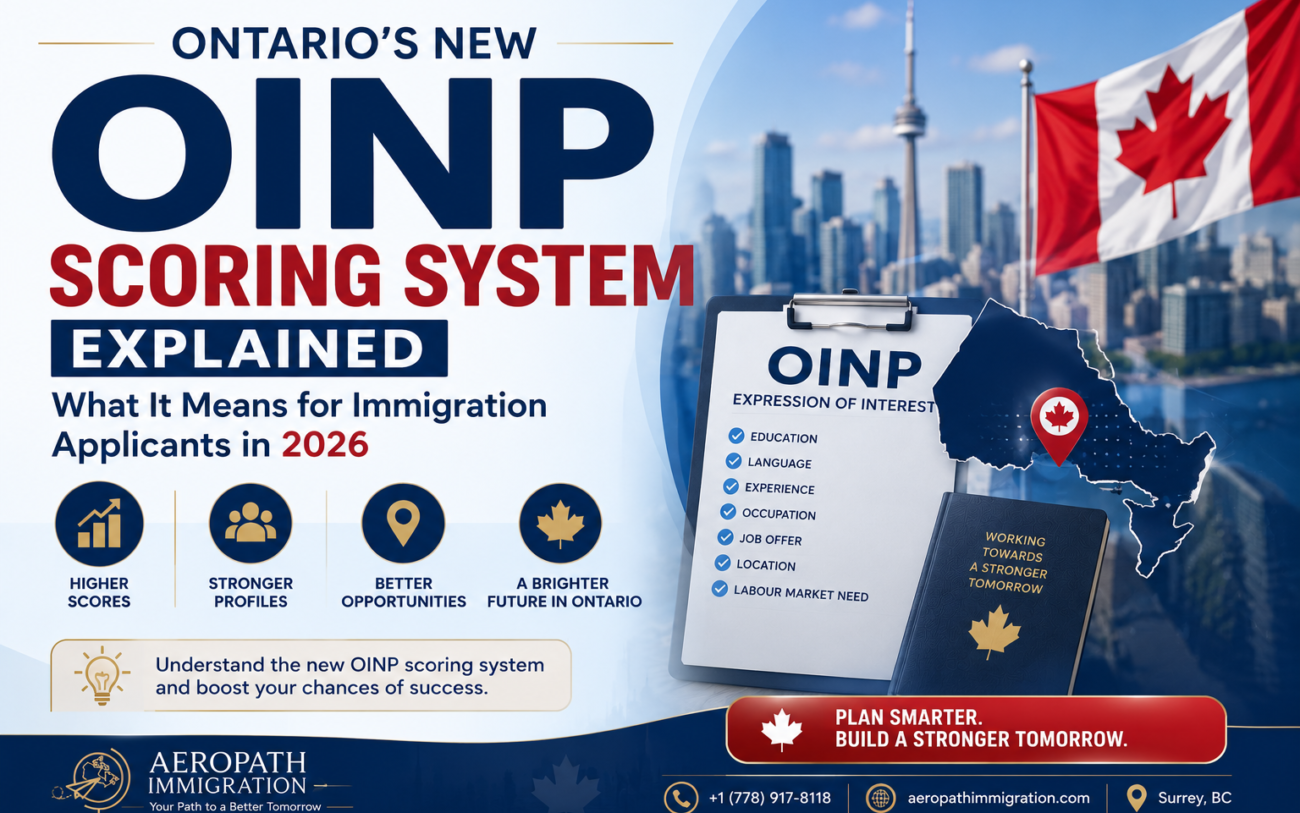
The new scoring system evaluates several aspects of an applicant’s profile, including:
- Education
- Language ability
- Canadian work experience
- Occupation
- Job offer details
- Wage offered
- Location of employment
- Regional labour market needs
Together, these factors determine an applicant’s overall EOI score.
Regional Employment Now Matters More
One of the most notable changes is the increased emphasis on where an applicant intends to work. Ontario is encouraging immigration outside the Greater Toronto Area by awarding additional points to candidates with job offers in smaller communities and regions experiencing greater labour shortages. This supports more balanced economic growth across the province while helping employers in rural and northern Ontario fill critical positions.
Occupation and Labour Market Demand Play a Bigger Role
Ontario’s new scoring system also places greater importance on occupations that are in demand. Applicants working in sectors experiencing labour shortages may receive higher scores than candidates in occupations where demand is lower. This reflects a growing trend across Canada’s immigration system, where economic priorities increasingly influence immigration selection.
Wage Offered Can Affect Your Score
Unlike previous systems, the wage associated with a job offer can now influence an applicant’s ranking. Higher wages may contribute to a stronger EOI score, reflecting Ontario’s focus on skilled employment and long-term economic contribution. However, salary is only one factor among many, and applicants should focus on building a well-rounded profile.
Education and Language Still Matter
Education and language proficiency remain important components of the scoring system. Applicants with higher educational qualifications and stronger English or French language test results are generally better positioned within the EOI pool. Improving language scores can still be one of the most effective ways to increase competitiveness.
What Does This Mean for Applicants?
The new scoring model makes one thing clear: Immigration is becoming increasingly strategic. Applicants can no longer assume that simply meeting minimum eligibility requirements will be enough. Instead, factors such as occupation, employment location, wage level, education, and language proficiency all work together to determine competitiveness. Understanding how these factors interact can help applicants make more informed decisions about their immigration pathway.
How Can You Improve Your EOI Score?
Depending on your circumstances, you may be able to strengthen your profile by:
- Improving your language test results.
- Gaining additional skilled work experience.
- Pursuing higher educational qualifications.
- Securing a stronger job offer.
- Considering employment opportunities in regions with greater labour demand.
- Ensuring your occupation aligns with Ontario’s current economic priorities.
Small improvements in multiple areas can significantly strengthen an overall profile.
Final Thoughts
Ontario’s updated Expression of Interest scoring system represents another step toward a more targeted and labour market-focused immigration system. For prospective immigrants, this means planning ahead has never been more important. Understanding how your profile is assessed—and where improvements can be made—can increase your chances of receiving an invitation under the Ontario Immigrant Nominee Program.
If you’re considering immigration through Ontario and want to understand how the new scoring system may affect your profile, professional guidance can help you identify the pathway that best aligns with your qualifications and long-term goals. At AeroPath Immigration, we help applicants navigate changing immigration policies and build strategies that support their journey toward permanent residence in Canada.