Renew Permanent Resident Card Canada: Requirements and Process
What is a permanent resident card?
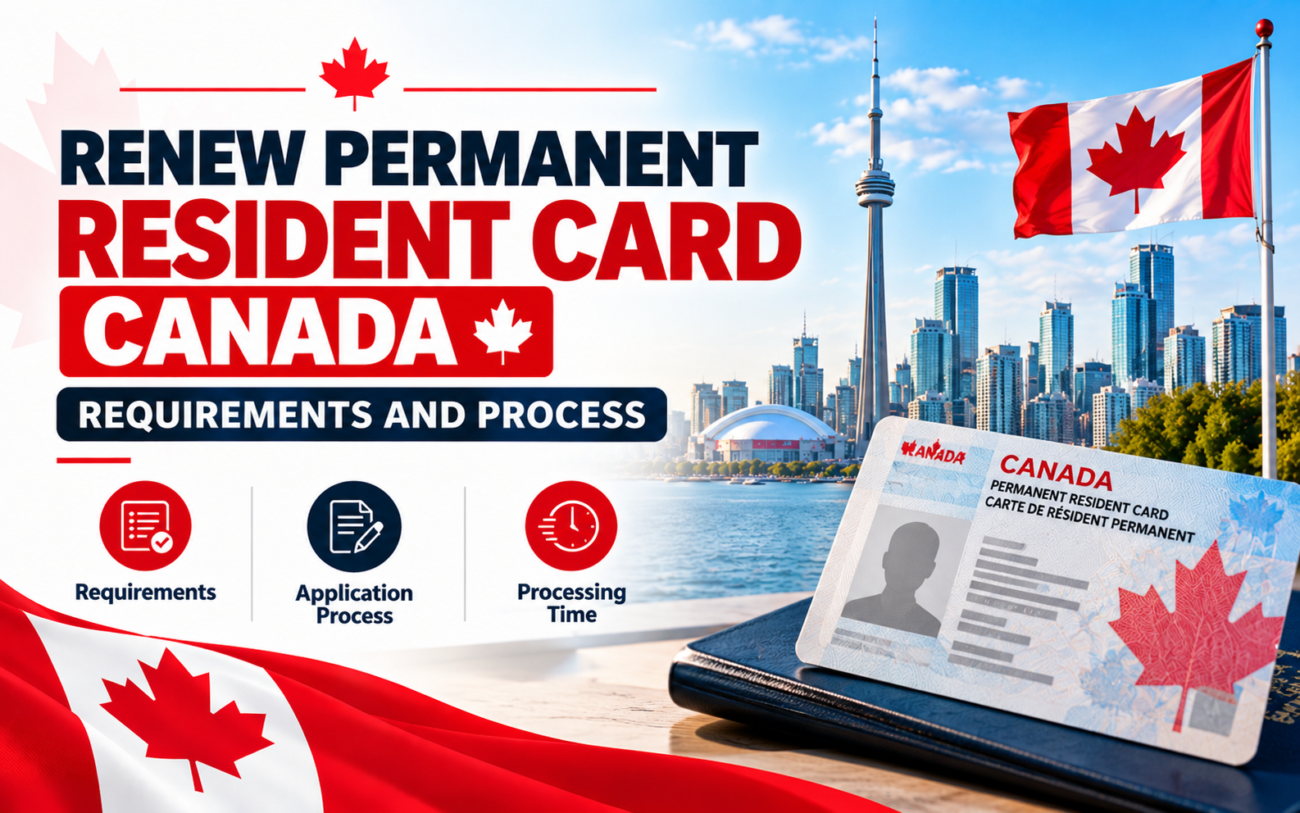
A Canadian permanent resident (PR) card is an official status document commonly used by permanent residents to prove their status when returning to Canada on a commercial carrier. It is not the same as permanent resident status itself. In many cases, an expired card does not automatically mean a person has lost PR status, but the person’s residency obligation and any individual immigration history still matter.
Most permanent residents who travel outside Canada and return by commercial plane, train, bus or boat need a valid PR card or an appropriate permanent resident travel document (PRTD). A PR card is not a travel document for visa rules in every other country, so check the destination country’s requirements separately.
Check the residency obligation first
Permanent residents generally need to be physically present in Canada for at least 730 days during a five-year period, subject to specific rules for some time spent abroad with a Canadian citizen spouse or employed by a qualifying Canadian business or public service. The calculation can be fact-specific. Do not assume every day abroad counts or does not count; check the official residency obligation rules.
If the person has been a permanent resident for less than five years, IRCC may assess whether they can still meet the 730-day requirement by the fifth anniversary of becoming a PR. A person with a longer PR history may be assessed over the relevant five-year period. Complicated travel histories, appeals, prior decisions or time outside Canada should be reviewed carefully before applying.
Documents to prepare
The exact checklist should be reviewed on the live IRCC PR-card page. Potential documents include:
- The current PR card, if available, and identity documents.
- The application form and document checklist required for a new or renewed card.
- Passport or travel document pages and records that help establish travel history.
- Evidence supporting days in Canada and any qualifying time abroad, if relevant.
- Additional identity, name-change or civil-status records where applicable.
- Fee payment confirmation and any requested supplementary evidence.
Do not send originals unless the official instructions explicitly request them. Ensure that copies are legible and translations follow IRCC’s rules. If the application asks for travel history, give an accurate record rather than trying to reconstruct only the most recent trips.
How to renew a PR card
1. Confirm that renewal is the right application
Use IRCC’s permanent resident card instructions to confirm the applicant is eligible to apply and identify whether the card is expiring, expired, lost, stolen, damaged or needs replacement. The required forms or evidence may vary by situation.
2. Review the five-year residency calculation
Create a complete timeline of entries and exits and identify days in Canada and any potentially countable days abroad. Keep records such as passports, travel tickets, employment letters, tax records, rental agreements, school records or other documents that match the facts. Do not rely on a rough estimate where the result is close to the minimum.
3. Complete the current form and supporting checklist
Use the current official form and instructions. Check the name, UCI, dates, mailing address and every requested item. Provide explanations and supporting evidence when needed. If any period abroad may qualify under a specific exception, document the relationship or employment and the applicable details.
4. Pay the current fee
Check IRCC’s current fee page and pay through the official process. Retain the receipt. Avoid copying a fee quoted by an old online article because amounts and requirements can change.
5. Track the application and respond to requests
Monitor the account and mailing address. If IRCC requests additional information, respond within the deadline. Processing varies, and a card renewal should not be planned around a guaranteed date. Use the official processing-time tool for the current estimate.
6. Plan travel carefully
If a permanent resident is outside Canada without a valid PR card, the person may need a PRTD to return by a commercial carrier. A PR card renewal application does not itself serve as a document for boarding a flight to Canada. Check IRCC’s PRTD guidance before booking travel. Do not assume an expired card can be used by an airline.
Expired card versus lost PR status
A PR card is evidence of status and a travel facilitation document; it is not the legal source of the status itself. A permanent resident’s status can be affected by specific legal findings or processes, including residency-obligation issues, but the date printed on the card alone does not ordinarily cause automatic loss of status. If the person has spent extended time abroad, received a report or decision, or has a complicated history, professional advice may be important before filing or travelling.
Common mistakes to avoid
- Treating PR-card renewal as an automatic administrative formality without checking residency days.
- Omitting travel periods or supplying inconsistent travel dates.
- Assuming that an expired card alone ends PR status.
- Assuming an expired card will be accepted by an airline for return travel.
- Failing to use current forms, fees or photo specifications.
- Sending original documents when not required.
- Ignoring a request letter or a returned application.
If your residency days are close or unclear
A borderline residency calculation deserves careful review before submitting. Make a single chronology of every trip, compare it against passport stamps and travel records, and identify any qualifying period abroad that may be counted under an exception. Keep evidence showing where you lived and worked, but remember that documents are useful only to the extent they support the actual rule being applied. If a residency concern has already led to an official report, decision or appeal, the ordinary renewal instructions may not tell the whole story. Avoid travelling without understanding the practical consequences of an expired card, the need for a travel document and any status-related concerns. Seek case-specific advice if your calculation is close to the minimum or includes long absences.
Keep a travel and status record
Keep a single folder with copies of previous and current PR cards, passports, travel itineraries, entry and exit records, application receipts and any IRCC letters. Add trips to a simple chronology when they occur rather than reconstructing several years of travel at renewal time. This is particularly useful if passports were renewed or stamps are difficult to read. If the card is lost or damaged, follow the current replacement instructions; do not assume the same checklist applies to every reason for applying. Check the official instructions before sending original documents.
Frequently asked questions
1. Can I renew my PR card from outside Canada?
The ordinary PR-card renewal process generally expects the applicant to be in Canada. A permanent resident outside Canada who needs to travel back on a commercial carrier may need a PRTD. Follow current IRCC instructions for the exact situation.
2. Does my status expire when my PR card expires?
In general, the expiry of the physical card does not by itself end PR status. However, residency obligations and any specific status decision must be considered.
3. How many days must I spend in Canada?
The general residency obligation is 730 days in the applicable five-year period, subject to detailed rules and qualifying exceptions. Use official guidance and calculate carefully.
4. Is the processing time guaranteed?
No. Use the current official processing-time tool, and do not make plans based on a promised issue date.
Prepare before applying or travelling
The safest starting point is to review residency days, confirm the correct application and plan travel around valid documents. AeroPath Immigration lists PR card renewal assistance as a service. Applicants with long absences, unclear travel records or prior immigration decisions should ask for a careful case-specific review before filing.