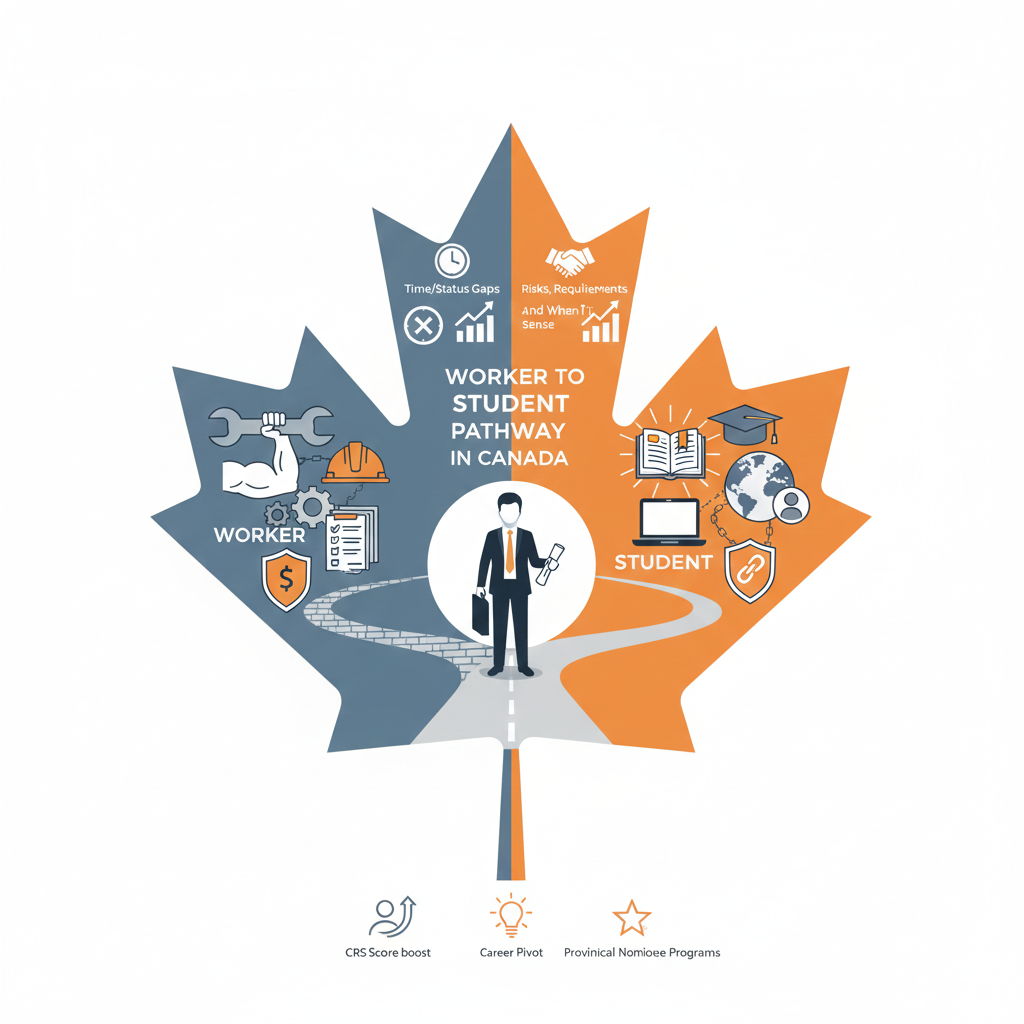
Worker to Student Pathway in Canada: Risks, Requirements, and When It Makes Sense
In recent years, many temporary foreign workers in Canada have started exploring a shift from a work permit to a study permit. For some, it’s a strategic move to maintain legal status, upgrade qualifications, or reposition their immigration profile. For others, it becomes a costly mistake that leads to refusals, delays, or long-term complications.
The worker-to-student pathway is not a shortcut—and it does not suit every case. Understanding when it works, what IRCC expects, and where applicants go wrong is critical before making this transition.
What Is the Worker to Student Pathway?
The worker-to-student pathway refers to applying for a Canadian study permit while already in Canada on a valid work permit. This can be done either:
- Before the work permit expires (to maintain status), or
- After strategic planning to align education with long-term immigration goals.
IRCC assesses these applications differently than overseas study permits. Officers look closely at intent, logic, and consistency in your profile.
Key Requirements IRCC Assesses
When a worker applies to become a student, IRCC does not just check admission and finances. Officers evaluate whether the transition makes sense in the context of your background.
1. Logical Progression of Studies
Your proposed program must clearly connect to:
- Your previous education, and/or
- Your Canadian or overseas work experience
A sudden downgrade or unrelated program often raises red flags.
2. Genuine Temporary Resident Intent
Even though you may be planning permanent residence in the future, IRCC must still be satisfied that:
- You understand the temporary nature of a study permit
- Your study plan is genuine, not a status-preservation tactic
Poorly explained intent is a common refusal reason.
3. Strong Financial Documentation
Applicants must show:
- Tuition coverage
- Living expenses
- Clear source of funds
Inconsistent or unexplained finances can trigger additional review or refusal.
4. Clear Status Management
Timing matters. Applications filed too late, without maintained status, or with gaps can create complications—even if the study permit is later approved.
Common Risks of the Worker to Student Pathway
This pathway carries real risks when not planned properly.
Refusal Due to Weak Study Rationale
IRCC often refuses applications that appear to be filed only to extend stay, without a strong academic or career explanation.
Misalignment With Career History
Programs that do not add value to your professional profile may be seen as unnecessary or illogical.
Future PR Complications
A poorly planned study decision can:
- Weaken CRS points
- Create inconsistencies in future PR applications
- Trigger closer scrutiny of intent later
When the Worker to Student Pathway Makes Sense
This pathway can be effective when used strategically, not reactively.
When Your Work Permit Is Expiring and PR Is Not Yet Secure
A well-planned study permit can help maintain legal status while strengthening your long-term profile.
When Education Adds Real Value
If the program:
- Improves career prospects
- Aligns with Canadian labour market needs
- Supports Express Entry or PNP pathways
…it can be a smart move.
When Backed by Proper Case Management
Applications supported by:
- A clear study plan
- Strong documentation
- Thoughtful explanation of intent
stand a much better chance of approval.
Filing vs Managing the Case
Many refusals occur not because applicants were ineligible—but because the case was filed, not managed.
Managing a worker-to-student transition involves:
- Assessing long-term immigration goals
- Choosing the right program and timing
- Addressing IRCC’s unstated concerns proactively
This is where professional guidance makes a difference.
Final Thoughts
The worker to student pathway is not inherently good or bad—it is highly case-specific. When done right, it can support status continuity and future immigration plans. When done wrong, it can lead to refusals and long-term setbacks.
Before making this transition, it’s important to evaluate whether it truly supports your goals—not just your immediate situation.
For individuals considering a change of status in Canada, informed planning is always stronger than rushed decisions.
— AeroPath Immigration