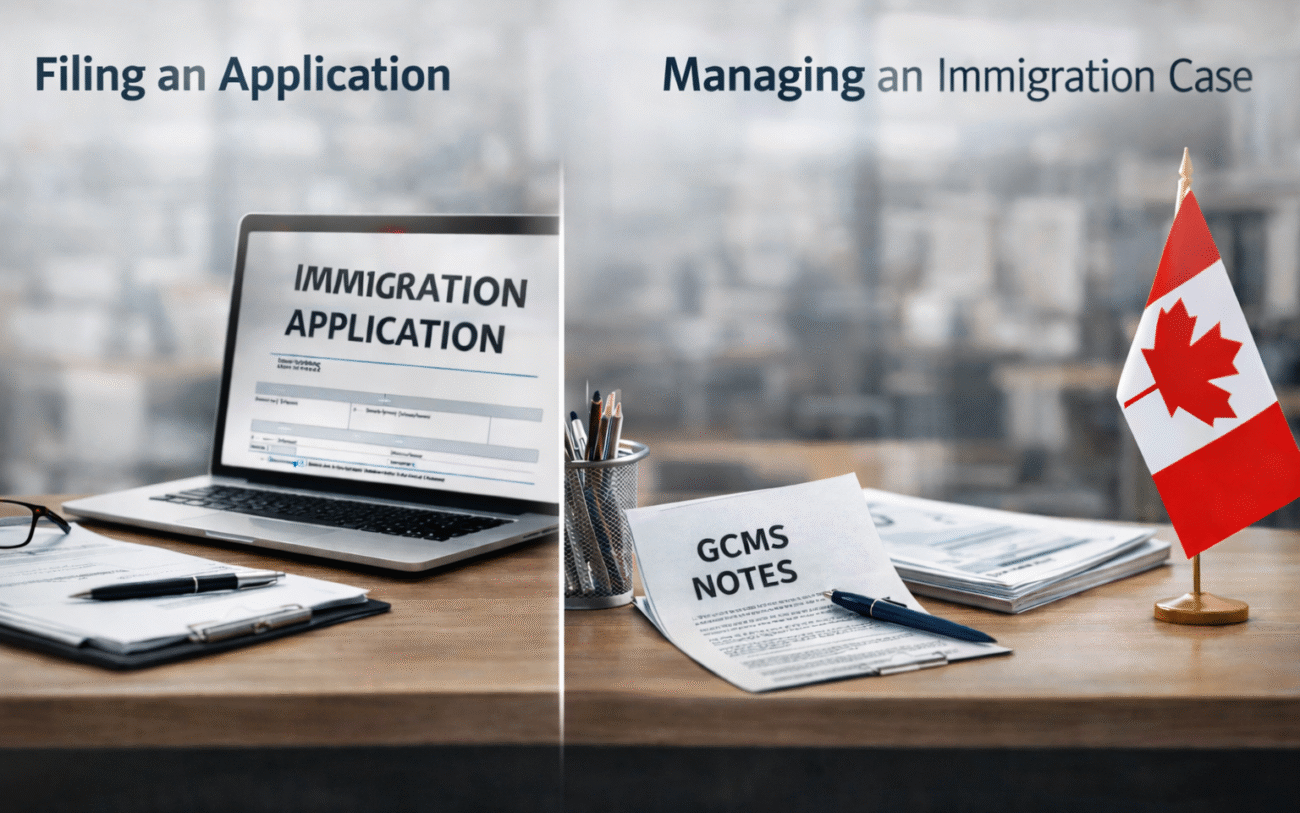
The Difference Between Filing an Application and Managing an Immigration Case
Many people believe Canadian immigration is simple:
Fill the forms. Upload the documents. Wait for approval.
In reality, this mindset is one of the biggest reasons applications get delayed, flagged, or refused.
There is a huge difference between filing an application and managing an immigration case—and understanding this difference can directly impact your outcome.
Filing an Application: What Most People Do
Filing an application is a technical task. It focuses on completing what IRCC visibly asks for.
This usually includes:
- Filling out IRCC forms
- Uploading documents listed on the checklist
- Paying government fees
- Submitting the application online
At this stage, the goal is simple: submission.
But here’s the problem —
IRCC’s online checklist only shows minimum requirements, not what officers actually assess behind the scenes.
Filing an application does not mean:
- Your documents fully support your claims
- Your work experience is clearly aligned with the correct NOC
- Your intent is well explained
- Your file is protected against misinterpretation
Submission ≠ Strength.
Managing an Immigration Case: What Actually Leads to Approvals
Case management goes far beyond uploading documents.
It focuses on how IRCC officers read, interpret, and assess your file.
Managing a case involves:
🔹 Strategic Documentation
Not just what you submit — but why, how, and in what context.
- Supporting job duties, not just offer letters
- Explaining gaps, role changes, or overlaps
- Strengthening weak areas before IRCC questions them
🔹 Anticipating Officer Concerns
IRCC officers are trained to look for:
- Inconsistencies
- Missing context
- Overclaimed experience
- Weak proof of intent or ties
Case management means addressing these issues before they become concerns, not reacting after a refusal.
🔹 Active File Monitoring
Most delays and refusals happen during:
- Eligibility review
- Background assessment
- Officer clarification stages
Proper case management includes:
- Monitoring status changes
- Knowing when delays are normal vs problematic
- Requesting GCMS notes when needed
- Taking corrective action early
🔹 Tailored Legal Explanations
Two applicants can submit the same documents and get different outcomes.
Why?
Because IRCC does not assess documents in isolation — they assess credibility, consistency, and intent.
Managing a case means:
- Custom explanations, not generic letters
- Aligning facts with IRCC policy
- Presenting your profile clearly and defensibly
Why This Difference Matters More Than Ever
In 2025 and beyond, IRCC scrutiny is increasing due to:
- Higher application volumes
- Program pauses and caps
- Tighter eligibility enforcement
- Increased refusals for “not satisfied” reasons
This means:
✔️ A complete application is no longer enough
✔️ A well-managed case is essential
Filing Gets You in the System. Case Management Gets You Results.
At AeroPath Immigration, we don’t just submit applications.
We:
- Analyze your profile before submission
- Strengthen weak areas proactively
- Manage your case through every IRCC stage
- Step in when files stall, get flagged, or need correction
Because immigration is not about pressing submit —
it’s about how your case is understood by the officer reviewing it.
Thinking About Applying or Already Waiting on a Decision?
If your application is delayed, under review, or you’re unsure about your next step, professional case management can make the difference between approval and refusal.
📩 Speak to AeroPath Immigration
Let’s manage your case — not just file it.